
1The Two-Step Process Behind AI Video Summarization
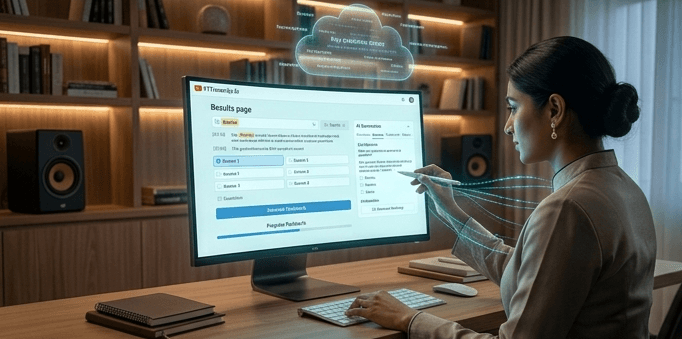
AI video summarizers do not actually watch videos. They work with text. The process has two steps:
1. Transcript extraction — the tool pulls the full caption text from the YouTube video, converting spoken content into a text document with timestamps.
2. AI analysis — a large language model reads the transcript and generates a concise summary, identifying key themes, main arguments, and important details while discarding filler, repetition, and tangents.
This two-step approach means the quality of the summary depends on two factors: the quality of the transcript (which depends on caption quality) and the capability of the AI model. Modern AI models produce summaries that read like they were written by a human — coherent, well-structured, and focused on what matters.
2When Video Summarization Saves Real Time
Summarization is most valuable when the video is long and your time is short. Here are the highest-value scenarios:
Hour-long lectures: a 60-minute lecture becomes a 3-minute summary with key concepts highlighted. Perfect for exam review.
Conference talks: summarize a full day of conference presentations to decide which ones deserve your full attention.
Podcast episodes: get the key takeaways from a 2-hour podcast in 30 seconds.
Meeting recordings: extract action items and decisions from recorded meetings without re-watching.
Product reviews: compare products by summarizing multiple review videos instead of watching each one.
In each case, the summary lets you decide whether the full video is worth your time — and if it is, the timestamps let you jump directly to the sections that matter most.
3Beyond Summaries: Other AI Actions
Summarization is just one of many ways AI can transform a transcript. Other high-value actions include:
Key Points — bullet-point extraction of the most important statements.
Mindmap — a visual diagram showing how topics relate to each other.
Quiz — multiple-choice questions to test understanding.
Flashcards — question-answer pairs for spaced repetition studying.
Study Guide — an organized document with sections, definitions, and key concepts.
Blog Article — a full written article restructured from the spoken content.
Clean Transcript — polished text with filler words removed and punctuation fixed.
Translation — the transcript converted to any target language.
Each action takes 5-15 seconds and produces output that would take a human 30-60 minutes to create manually.
Try It Yourself
Paste any YouTube URL below and get the full transcript with timestamps in seconds. Free, no sign-up required.
4Tips for Getting Better AI Summaries
The quality of your summary depends partly on the source material. Here are tips for consistently good results:
Choose videos with clear audio — the cleaner the speech, the more accurate the transcript, and the better the summary.
Prefer videos with manual captions — they are more accurate than auto-generated ones, which means fewer errors propagate into the summary.
For very long videos (2+ hours), consider summarizing in sections rather than all at once — the AI can focus more deeply on shorter chunks of content.
Always scan the summary for accuracy — AI is excellent but not perfect. Names, numbers, and technical terms occasionally get mangled.